Can I Travel to Russia Now? Entry Rules, Visas and Official Advice (2026)
Quick answer
Check the current citizenship list, conditions and payable amount on the official Russian MFA unified eVisa portal. A tourist invitation is not required for the eVisa.
That legal-entry question is not the same as a safety or personal-travel decision. For example, the U.S. Department of State currently lists Russia at Level 4 — Do Not Travel, while the UK Foreign, Commonwealth & Development Office advises against all travel to Russia. Read your own government's current travel advice before booking or departing. U.S. Department of State travel advice and UK FCDO travel advice are cited here because they are official sources; travellers of other nationalities should consult their own foreign ministry as well.
Reviewed on 21 August 2026. Entry procedures, border operations, airline routes and government advisories can change quickly. This article explains the official routes and preparation checks; it does not replace advice from the Russian authorities, your carrier, insurer or government.
Step 1: identify the entry route for your passport and travel purpose
Start with your nationality and the purpose of your trip. The three broad routes are different:
- Visa-free travel, where a bilateral agreement applies to your nationality and trip. The exact conditions, duration and permitted purpose vary, so verify them through an official Russian consular source before travel.
- The unified e-visa, for nationals on the Russian Government's approved list and for the purposes permitted by the e-visa rules.
- A regular visa, which is generally the route for travellers who are not eligible for the e-visa, need a purpose outside the e-visa scope, require a different entry pattern, or need a longer stay.
Do not use a generic country list copied from an old article. The official Russian MFA e-visa country list is the correct starting point because the approved nationalities can change.
Step 2: understand the Russian e-visa route
The Russian MFA's official e-visa portal says a unified e-visa is available only to citizens of the countries on the approved list. It can be used for tourism, private or business visits, and specified events or contacts. It is not a substitute for a regular visa when the purpose of travel falls outside those categories. Read the official e-visa instructions.
The current official rules state that the e-visa is single-entry, valid for 120 days from issue, and permits a stay of up to 30 days from entry. The portal also says applications may be filed no earlier than 86 days and no later than 4 days before the planned entry date, and that processing takes no more than four calendar days.
The e-visa route is intentionally streamlined. The MFA says applicants do not need an invitation letter, hotel booking confirmation or another document confirming the purpose of travel. You do still need to satisfy the application requirements: use a machine-readable passport issued by your country of nationality, ensure it has at least six months' validity from the application date, provide the requested digital materials, and check the insurance requirement. The official portal says e-visa travellers generally need medical insurance valid in Russia for the full stay, subject to reciprocity-based exemptions.
A final practical point matters: e-visas can be used only through the official designated border crossing points. Confirm that your intended airport, rail, road or sea crossing is on the current official list before purchasing non-refundable travel.
For a deeper comparison of the two visa routes, see our Russia e-visa guide and e-visa versus regular visa comparison.
Step 3: when a regular visa is the appropriate route
A regular visa is normally the route to investigate if your passport is not on the e-visa list, your purpose does not fit the e-visa categories, you need a different entry pattern, or the conditions of your trip cannot be met through the e-visa route.
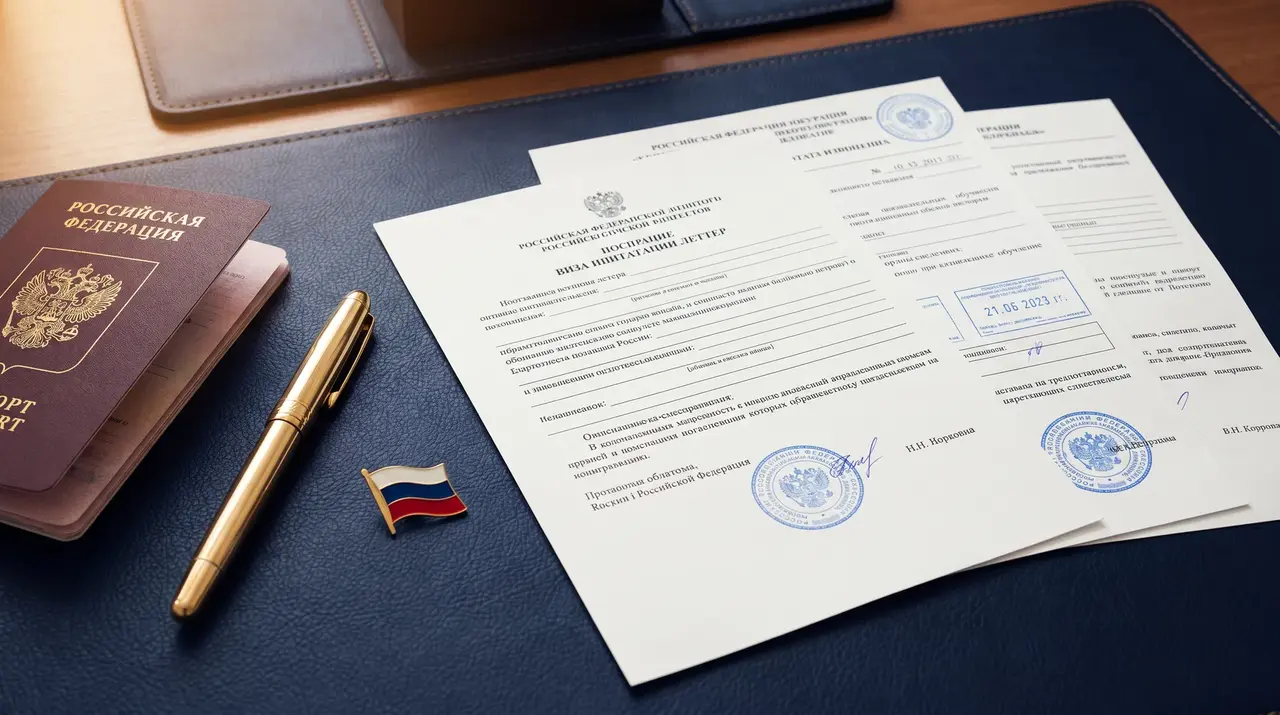
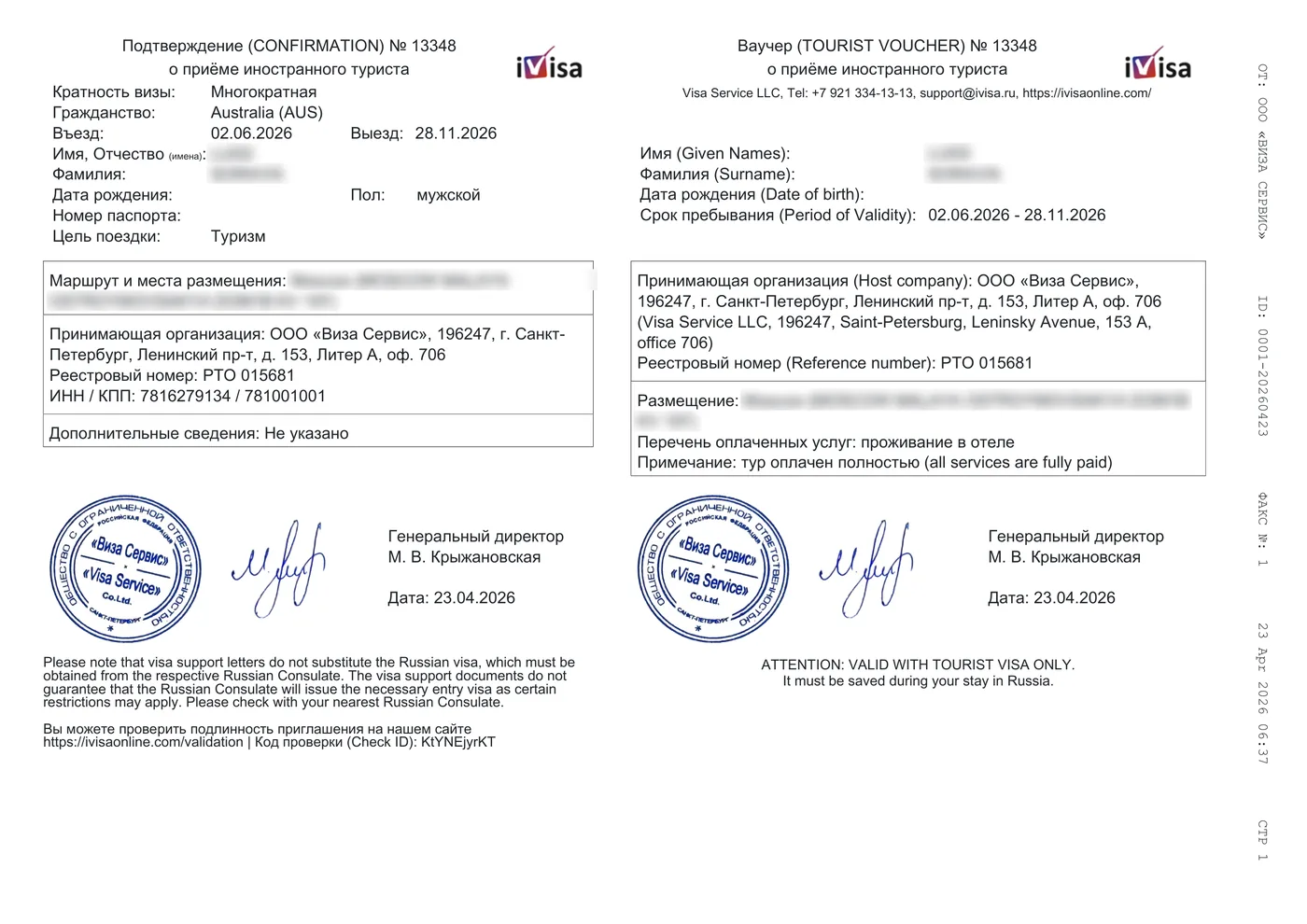
For a tourist visa, the application package commonly includes visa-support documents in addition to the consular or visa-centre requirements for the applicant's nationality. A tourist invitation is not the visa itself: it is a supporting document used for the regular tourist-visa application. You can read what the document is, what it contains and whether it fits your route on our Russian visa invitation guide.
Treat the relevant Russian embassy, consulate or official visa application centre as the final authority for the documents, appointment process, fee and processing time that apply to your passport. City-specific pages on this site can help you find the appropriate submission route, but they do not replace an official instruction.
Step 4: separate visa eligibility from travel-risk advice
A valid visa or e-visa can establish an entry route, but it does not answer every travel question. Government travel advisories are risk assessments issued by the traveller's home country, not Russian visa rules.
The U.S. Department of State's current Russia page says U.S. citizens require a visa before travel and carries a Level 4 advisory. It also describes limited U.S. consular assistance, possible disruption to transport, payment restrictions and particular issues for dual U.S.-Russian nationals. Read the current U.S. advisory.
The UK FCDO's Russia page, current when this article was reviewed, advises against all travel. It cites security incidents, limits on return-flight availability and limited UK government support. It also notes that Russian authorities treat dual British-Russian nationals as Russian citizens. Read the current FCDO advice.
These advisories are material facts for travellers, especially for U.S., UK and dual nationals. They should be reviewed directly and in their latest form. This page does not tell an individual whether they should travel.
Step 5: prepare the documents and route before departure
A useful pre-departure check is short, but it should be completed against current official information rather than an old checklist:
- Passport. Verify that the passport you will use at the border matches your visa or e-visa application. For the e-visa route, the MFA specifies a machine-readable passport valid at least six months from the application date.
- Insurance. Check the Russian rule applicable to your route and read your insurer's territorial coverage, exclusions and emergency-assistance conditions. Our travel insurance guide explains the role of insurance in a visa application, but your policy wording controls the actual cover.
- Border crossing and carrier. Confirm your intended crossing point is permitted for your document type and confirm directly with the airline, rail or other carrier that it will carry you under the documents you hold.
- Accommodation and onward details. Keep the addresses, contact details and onward arrangements that may be relevant to your application, carrier or arrival process.
- Payment plan. Do not assume a foreign card will work. The U.S. State Department says U.S. debit and credit cards no longer work in Russia. Other travellers should check their own bank and card network before departure rather than relying on a general statement about all cards.
- Government support. Review the latest advisory for your nationality, particularly the information on dual nationality, detention risk and the limits of consular assistance.
What happens after arrival?
Entry is ultimately decided by the border authorities. Carry the documents linked to your route and ensure the purpose of your visit is consistent with the document you hold. A visa is not a guarantee of admission if an immigration or border rule is not met.
During the stay, foreign visitors also need to follow the local migration and accommodation-registration requirements that apply to their situation. A hotel may handle some registration steps for its guests, while private accommodation can require action by the receiving party. Check the current instruction with your host or the relevant official authority rather than relying on a previous visitor's experience.
A practical decision framework
The most accurate answer to “Can I travel to Russia now?” has two parts. First, can I meet the legal entry conditions? Check the live Russian MFA information for the relevant visa route, your passport and your intended border crossing. Second, do I understand the current risks and practical limitations? Check your own government's latest advisory, your insurer, your carrier and your payment options.
If you need a regular tourist-visa support document after confirming that this is the appropriate route for you, review the requirements on our visa invitation page and the regular Russian visa overview. If the e-visa route is available for your passport and trip, use the official MFA portal directly for the application and current conditions.
Frequently asked questions
Can I travel to Russia as a tourist now?
Check the current citizenship list, conditions and payable amount on the official Russian MFA unified eVisa portal. A tourist invitation is not required for the eVisa.
Do I need a Russian visa if I am eligible for an e-visa?
The unified e-visa is itself a visa. You do not need to hold a separate regular visa for the same trip if the e-visa route fully fits your nationality, purpose, stay and entry point. The MFA says a person with a valid regular Russian visa does not need to obtain an e-visa.
Can I get an e-visa with a passport from any country?
No. Only citizens of the countries on the Russian Government-approved list are eligible. Use the live official country list rather than a copied list.
Does a Russian e-visa require an invitation letter?
No. The MFA e-visa portal states that an invitation letter, hotel confirmation and another document confirming the purpose of travel are not required for the unified e-visa. A regular tourist visa follows a different document process.
Why should I read my government's advisory if Russia may issue me a visa?
Visa issuance and travel advice answer different questions. A visa concerns a legal route to request entry. A home-government advisory addresses risks, available support and practical conditions for its own citizens. Both are relevant to planning.